Partner feature
Journal / Feature
The most expensive meeting you never measure
Companies spend $200,000 to $1 million bringing everyone together, then judge the result with a feedback form. Performance coach Mark Dobson thinks the annual conference is where strategy should start turning into behaviour.
By Keynote Journal·
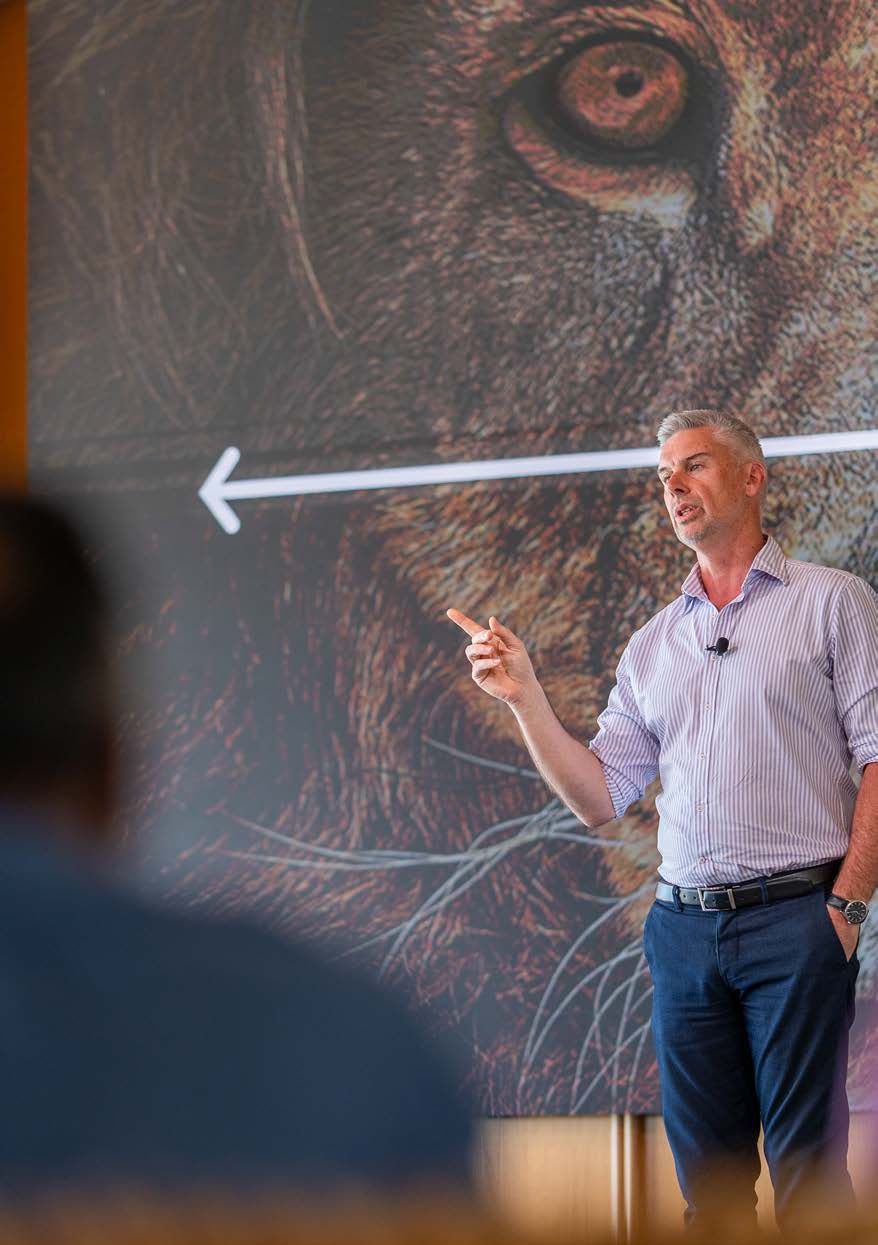
Ask a leadership team what last year's conference cost and someone will know the figure. Ask what it changed and the room goes quiet.
Mark Dobson has spent three decades in rooms where results are not optional: Olympic campaigns, world record attempts, and the executive floors of banks and global food companies. Known to clients as Dobbo, he describes his work as closing the gap between what an organisation intends and what its people actually do. His argument about conferences comes straight out of that work.
"Companies rarely fall short because their people don't care," he writes in his 2026 book, The Performance Conference. "They fall short in the relationship between strategy and behaviour."
A budget with no outcome attached
Dobson's starting point is a number. A company conference costs between $200,000 and $1 million, he writes, and it is often approved with no defined commercial outcome. Any other spend of that size would carry a target return.
He lists four more missed opportunities. Attendees spend most of the time listening and reading slides, which they could have done from home. Sessions lean on stories that end in a philosophy, leaving each person to work out what to do differently. People go home tired, with a full inbox waiting. And the conference ends when the conference ends, with no plan for what happens next.
One question changes the agenda
The traditional planning questions are familiar: what should the theme be, who should speak, how do we make it memorable. Dobson replaces them with one.
"What does the business need our people to do differently when they go back to work?"
From there the event is reverse engineered. Start with the result the business needs. Identify the few behaviours that will produce it. Then decide what has to be taught, practised and discussed in the room for those behaviours to show up back at work.
He calls a conference built this way a Performance Conference. Its test is blunt. There is no follow-up survey. After 90 days, he writes, behaviours and targets are either being hit or they are not.
What it looks like in the room
Much of the method is practical. Put discussion time between speakers so one idea can settle before the next arrives. Run the schedule at 80 per cent full. Give internal presenters an outcome to deliver, not an hour to fill. Keep text off slides. Before the event closes, have people send the meeting invites and messages that start the new agenda, so the change has begun before anyone leaves the venue.
Some of it is disarmingly small. "Show me their diary and I will tell you your future," he writes. A conference has worked when diaries look different afterwards.
And some of it cuts against habit. Award the people living the values, he argues, not the ones hitting targets. Ask each attendee to commit to one small action they will do for certain, not a long list they will abandon.
Why organisers bring him back
Dobson is candid that a keynote alone has limits. One slide in his speaker deck plots a typical motivational speaker against time: inspiring on the day, faded by the next quarter. His pitch is the other end of that chart, and many clients have kept him for three to ten years.
One of them, an executive division of a multinational, has had him present for two to three days at its annual conference for four years. "We bring him back as he is always new, always relevant, and we see the results in the business," the client says.
Olympic medallist Grant Hackett puts it more simply: "Mark shrinks what is insurmountable into the activities that really matter. He narrows your focus."
For anyone signing off a conference budget this year, Dobson's question is a useful place to start. What does the business need these people to do differently when they go back to work?